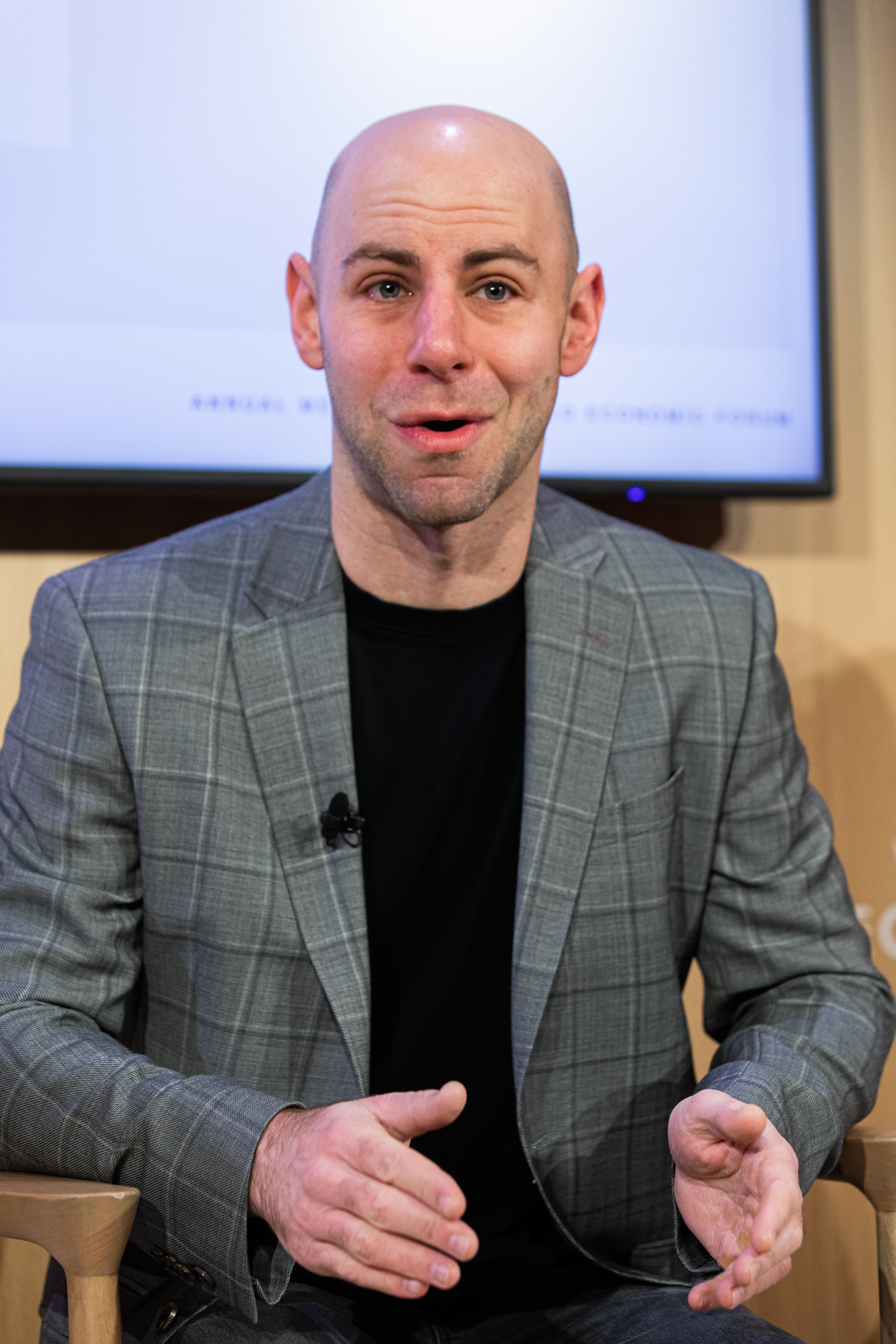
The breakdown
These scores are expert estimates produced from the Wellspoken Index rubric, not the production pipeline. The methodology link below explains how the dimensions are weighted. Read the methodology.
- Structure215 / 250 (86%)
- Conciseness150 / 200 (75%)
- Confidence135 / 150 (90%)
- Pronunciation136 / 150 (91%)
- Filler Rate125 / 150 (83%)
- Pace70 / 100 (70%)
In the recording
'The Surprising Habits of Original Thinkers,' TED2016, opening
Seven years ago, a student came to me and asked me to invest in his company. He said, "I'm working with three friends, and we're going to try to disrupt an industry by selling stuff online." And I said, "OK, you guys spent the whole summer on this, right?" "No, we all took internships just in case it doesn't work out." "All right, but you're going to go in full time once you graduate." "Not exactly. We've all lined up backup jobs." Six months go by, it's the day before the company launches, and there is still not a functioning website.
- Structure / Signposting. Opens with his own misjudgment rather than a credential or thesis statement, building credibility through candor before making any claim about what 'originals' do differently.
- Confidence / Assertiveness. Reenacts the actual back-and-forth dialogue verbatim, 'No, we all took internships,' rather than paraphrasing his skepticism, letting the audience draw the same conclusion he did in real time.
- Pace / Rhythm. Short alternating lines of dialogue create a quick back-and-forth rhythm that speeds up the section right before the reveal that the company was Warby Parker.
How to speak like Adam Grant
Open with a personal failure, not a success
Leads with his own bad investment decision, passing on what became Warby Parker, rather than a credential, building credibility through candor instead of authority.
Reenact dialogue instead of summarizing it
Replays the actual back-and-forth conversation, 'No, we all took internships just in case it doesn't work out,' rather than paraphrasing it, letting the audience reach his conclusion before he states it.
Number the framework explicitly
States upfront how many traits or habits he will cover, then labels each one by number as he reaches it, a syllabus-style structure that academic and business audiences track easily.
FAQs
Why does Adam Grant open his TED talk with a story about turning down Warby Parker?
Leading with his own misjudgment does two things at once: it builds trust through candor rather than credentials, and it sets up the exact question the talk answers, why he and other cautious evaluators miss 'originals.' Confessing the mistake up front makes the audience more receptive to the framework that follows.
What is distinctive about Adam Grant's delivery style?
He tends to reenact conversations as dialogue rather than summarize them, and organizes talks around an explicitly numbered set of findings. Both habits come from his background presenting academic research to non-academic audiences, where clear structure and concrete scenes both aid retention.
Is Adam Grant's speaking pace fast or slow?
Brisk and evenly paced, typical of a TED mainstage talk, with short bursts of quicker dialogue during reenacted conversations and a slightly slower cadence when he states the research finding those scenes are building toward.