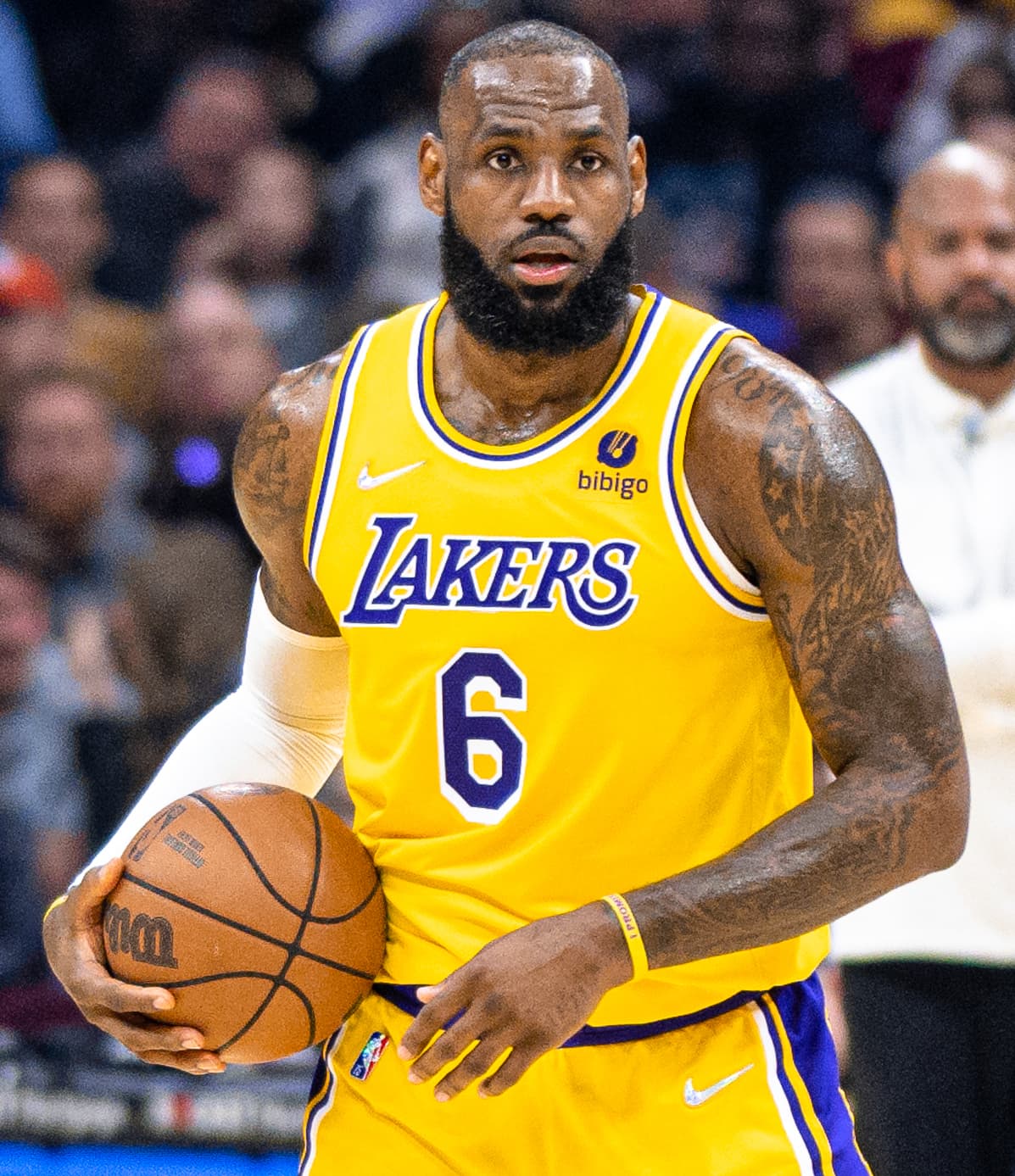
The breakdown
These scores are expert estimates produced from the Wellspoken Index rubric, not the production pipeline. The methodology link below explains how the dimensions are weighted. Read the methodology.
- Structure190 / 250 (76%)
- Conciseness130 / 200 (65%)
- Confidence145 / 150 (97%)
- Pronunciation135 / 150 (90%)
- Filler Rate100 / 150 (67%)
- Pace70 / 100 (70%)
In the recording
2016 ESPY Awards, closing statement
Tonight we're honoring Muhammad Ali, the GOAT. But to do his legacy any justice, let's use this moment as a call to action to all professional athletes to educate ourselves, explore these issues, speak up, use our influence and renounce all violence and, most importantly, go back to our communities, invest our time, our resources, help rebuild them, help strengthen them, help change them. We all have to do better.
- Structure / Signposting. Builds to the ask across one accumulating sentence, five straight action verbs (educate, explore, speak up, use, renounce) before 'go back' resets and stacks a second run of verbs. It's momentum through repetition rather than a tight numbered list.
- Confidence / Assertiveness. 'We all have to do better' is flat and short right after a long build-up sentence. No hedge, no qualifier, and it's the shortest line in the excerpt, which gives it the final weight.
- Conciseness / Word Economy. The six-verb chain covers a lot of ground but reads as additive rather than economical. He spends words for emphasis instead of cutting to one instruction.
How to speak like LeBron James
Anaphora under pressure
Repeats a sentence opener across consecutive clauses to build authority, as in his I Promise School remarks: 'I know the streets that they walk. I know the trials and tribulations they go through. I know the ups, the downs.'
Verb-stacked calls to action
Closes big-moment speeches with a chain of imperative verbs aimed at a specific audience, then lands on one short, flat sentence to end it.
Names the audience specifically
Addresses 'all professional athletes' or 'the next great police officer, the next great politician' rather than a generic crowd, putting the obligation on a named group instead of a vague call to 'be better.'
FAQs
Is LeBron James a good public speaker?
In prepared, high-stakes settings, yes. His 2016 ESPY Awards opening statement with Carmelo Anthony, Chris Paul, and Dwyane Wade is considered one of the more effective athlete-led speeches on a social issue in recent memory, built on short declarative closing lines after longer build-up sentences.
What is LeBron James' speaking style known for?
Repetition for emphasis. He often opens consecutive sentences the same way, 'I know... I know... I know...' at the I Promise School opening is one example, building a rhythm that makes the underlying claim feel earned rather than asserted once and dropped.
Does LeBron James use filler words when he speaks?
More than a scripted keynote speaker, less than an average unprepared speaker. In extended press conference answers he leans on connector phrases like 'you know' and 'obviously,' but in heavily prepared remarks, like the ESPYs statement, that filler mostly disappears.