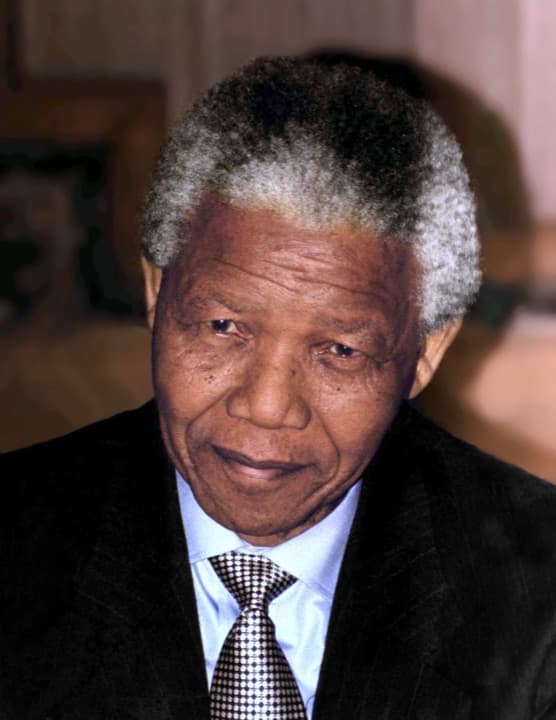
The breakdown
These scores are expert estimates produced from the Wellspoken Index rubric, not the production pipeline. The methodology link below explains how the dimensions are weighted. Read the methodology.
- Structure235 / 250 (94%)
- Conciseness168 / 200 (84%)
- Confidence148 / 150 (99%)
- Pronunciation138 / 150 (92%)
- Filler Rate134 / 150 (89%)
- Pace75 / 100 (75%)
In the recording
Inaugural address, Pretoria, May 10, 1994
Never, never and never again shall it be that this beautiful land will again experience the oppression of one by another and suffer the indignity of being the skunk of the world. Let freedom reign. The sun shall never set on so glorious a human achievement.
- Confidence / Assertiveness. 'Never, never and never again' triples the word to make the vow absolute. The repetition removes any room for doubt about the commitment.
- Conciseness / Word Economy. 'Let freedom reign' is three plain words placed alone after a long sentence. The brevity makes it land like a verdict rather than a phrase.
- Pace / Pause Timing. He delivers the lines slowly with full stops between them, so each absolute statement is given space to settle before the next begins.
How to speak like Nelson Mandela
Triple the word for an absolute vow
Repeat a single key word to push a promise past doubt. 'Never, never and never again' makes the commitment sound settled and total.
Practice: How to sound confident in meetings without being loudPlace a short line alone after a long one
Follow a long, weighty sentence with a three word statement standing by itself. 'Let freedom reign' lands like a verdict because of the contrast in length.
Practice: How to give shorter answers at workSpeak slowly to project calm
Deliver heavy lines at a measured pace with full pauses between them. The unhurried delivery reads as control, which is what made Mandela's resolve sound steady rather than strained.
FAQs
Why was Nelson Mandela considered a compelling speaker?
His delivery was slow, calm, and deliberate, which made even difficult calls for reconciliation sound like strength. The measured pace and plain language carried a sense of control that matched the weight of what he was asking.
What rhetorical techniques did Mandela use in his 1994 inaugural address?
He leaned on repetition and absolutes, as in 'never, never and never again,' and set short declarative lines like 'let freedom reign' against longer sentences. The contrast in length gave the short lines the force of a verdict.
What can speakers learn from Nelson Mandela?
Slow down, use plain words, and let a short line stand alone after a long one. A measured pace projects calm authority, and the spacing gives each important statement room to land.