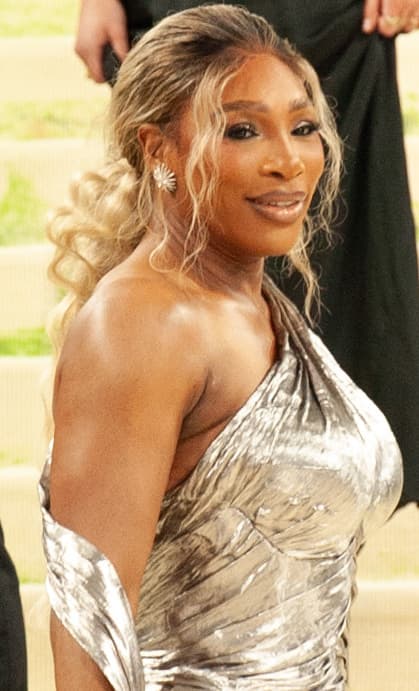
The breakdown
These scores are expert estimates produced from the Wellspoken Index rubric, not the production pipeline. The methodology link below explains how the dimensions are weighted. Read the methodology.
- Structure205 / 250 (82%)
- Conciseness150 / 200 (75%)
- Confidence148 / 150 (99%)
- Pronunciation140 / 150 (93%)
- Filler Rate120 / 150 (80%)
- Pace65 / 100 (65%)
In the recording
'The Hardest Thing,' Vogue, September 2022 issue, opening lines
I have never liked the word retirement. It doesn't feel like a modern word to me. I've been thinking of this as a transition, but I want to be sensitive about how I use that word, which means something very specific and important to a community of people. Maybe the best word to describe what I'm up to is evolution. I'm here to tell you that I'm evolving away from tennis, toward other things that are important to me.
- Structure / Signposting. Rejects one label, explains why she's sensitive about a second, and only then supplies the word she actually wants. Three moves across five sentences, each narrowing toward the thesis, instead of opening with the conclusion.
- Confidence / Assertiveness. 'I'm here to tell you' is direct address with no hedge. She doesn't ask the reader to accept the reframe, she states it as already settled.
- Word Choice / Precision. Chooses 'evolving away from' over a plainer verb like 'leaving' or 'quitting.' The word choice does the emotional work instead of an adjective doing it for her.
How to speak like Serena Williams
Reframe before explain
States the word she's rejecting and the word she's choosing before giving the reasoning, so the audience adopts her frame before the argument even starts.
Explicit either/or framing
States hard tradeoffs as clean binaries rather than open-ended explanation, as in her line about motherhood: 'I need to be two feet into tennis or two feet out.'
Second-person close for emotional weight
Shifts from first-person reflection to direct second-person address at emotional high points, speaking straight to tennis itself at the essay's close rather than describing her feelings about it.
FAQs
Why didn't Serena Williams call it 'retirement'?
She said the word didn't feel accurate to her plans and that she wanted to be sensitive about how loaded it can be for other people. In her Vogue essay, she explicitly renamed her decision 'evolution' before explaining it, choosing her own frame instead of accepting the word the press had already been using.
What is Serena Williams' speaking style known for?
Directness. Whether she's addressing an umpire, a press room, or, in this case, a magazine essay, she tends to state her position plainly and build her reasoning around specific concrete details rather than vague generalities.
Was Serena Williams' farewell essay a speech or something else?
It was a first-person essay published in Vogue, written as told to journalist Rob Haskell, not a spoken address. The reading here treats the excerpt as a sample of her communication style, the same directness and concrete framing show up in her live press conferences and on-court interviews.