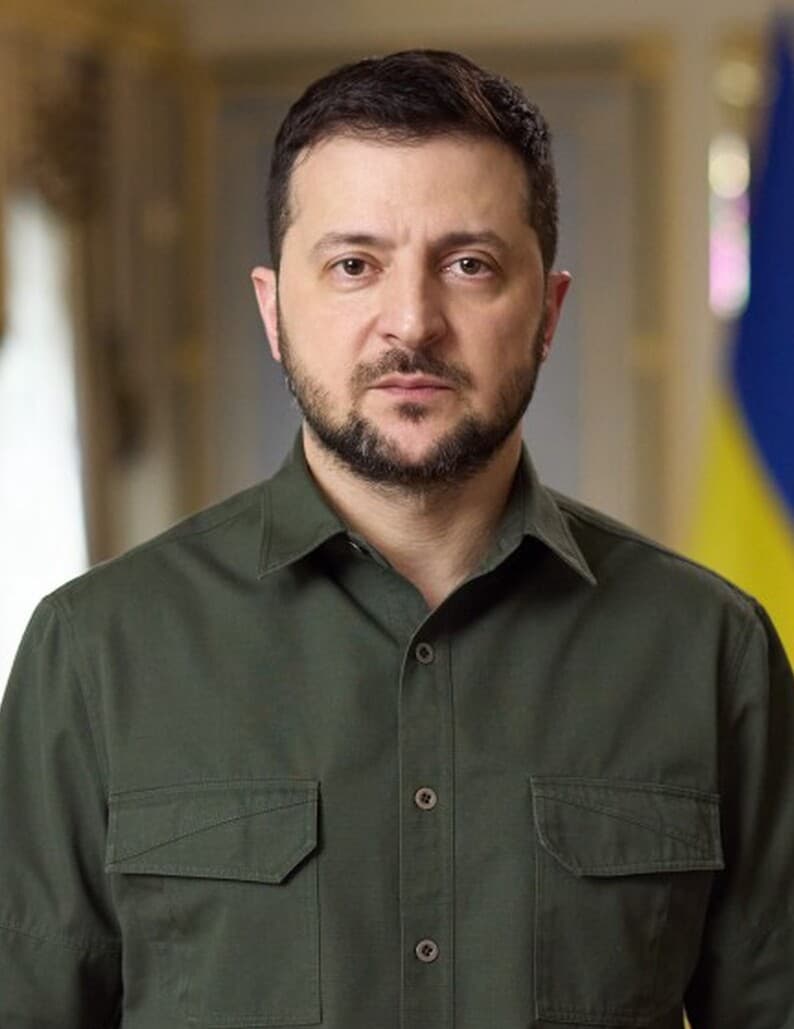
The breakdown
These scores are expert estimates produced from the Wellspoken Index rubric, not the production pipeline. The methodology link below explains how the dimensions are weighted. Read the methodology.
- Structure215 / 250 (86%)
- Conciseness150 / 200 (75%)
- Confidence145 / 150 (97%)
- Pronunciation108 / 150 (72%)
- Filler Rate140 / 150 (93%)
- Pace62 / 100 (62%)
In the recording
Address to the UK Parliament, March 8, 2022, Churchill callback
I remind you of the words that the United Kingdom has already heard because they are important again. We will not give up, and we will not lose. We will fight until the end at sea and in the air. We will continue fighting for our land, whatever the cost. We will fight in the forests, in the fields, on the shores and in the streets. We will fight on the banks of our rivers, like the Dnipro.
- Structure / Signposting. He names the move before he makes it: 'I remind you of the words...because they are important again' tells the audience a callback is coming before he delivers it.
- Confidence / Assertiveness. Four short declaratives in a row, each stated flatly with no qualifier: 'We will not give up,' 'we will not lose,' 'we will fight until the end,' 'whatever the cost.'
- Pace / Rhythm. The list 'in the forests, in the fields, on the shores and in the streets' compresses four images into one breath, building momentum toward the closing line.
- Word Choice / Historical Callback. The passage echoes Churchill's 1940 House of Commons speech almost clause for clause, a callback built specifically for the UK Parliament audience in this address.
How to speak like Volodymyr Zelenskyy
Count up the days
He opens by numbering each day of the invasion in sequence, turning an abstract crisis into a concrete, escalating timeline the audience can follow in real time.
Match the callback to the room
He reaches for the host country's own historical language, Churchill for the UK Parliament, so the emotional reference lands as something built for that specific audience.
Close on direct, named asks
He ends addresses with short imperative requests aimed at a specific person or body, such as 'Increase sanctions' or 'Recognize,' instead of a general call to action.
FAQs
Why did Volodymyr Zelenskyy's wartime speeches land so effectively with different national parliaments?
He builds each address around the host country's own historical reference points. For the UK Parliament he reached for Churchill's 1940 'we shall fight' speech almost clause for clause. The callback lands because it shows he prepared something specific for that room.
Was Zelenskyy always known as a strong public speaker?
Before 2019 he was best known as a comedic actor, including playing a fictional president on television. Communication analysts point to that performance background, reading a room, holding a persona under pressure, timing a line, as part of why his wartime addresses read as controlled and rehearsed, even under real pressure.
Did Zelenskyy deliver these addresses in English?
His parliamentary addresses, including the UK Parliament speech referenced here, are delivered in Ukrainian and reach English-speaking audiences through live interpretation or official translation. The techniques scored here, structure, pacing, repetition, are the ones that carry through translation and remain visible in the interpreted record.