Summary: Simon Sinek's "Start With Why" TED talk argues that the most influential leaders and companies communicate in the opposite order from everyone else: they start with why they do what they do, then how, and only then what. The main point is that people do not buy what you do, they buy why you do it, captured in his Golden Circle framework.
Simon Sinek's "Start With Why" TED talk argues that the most influential leaders and companies communicate in the opposite order from everyone else. They start with why they do what they do, then move to how, and only then to what. Most people start with what they make and never get to why it matters. The talk, formally titled "How great leaders inspire action," was delivered at TEDxPuget Sound in 2009 and is among the most-viewed TED talks of all time. Source: TED.
This summary covers the core idea, the framework you can reuse, and the delivery choices that make a fairly simple argument land so hard.
What Is the Main Point of "Start With Why"?
The main point is that people don't buy what you do, they buy why you do it. Sinek's claim is that purpose moves people to act more than the product itself ever does.
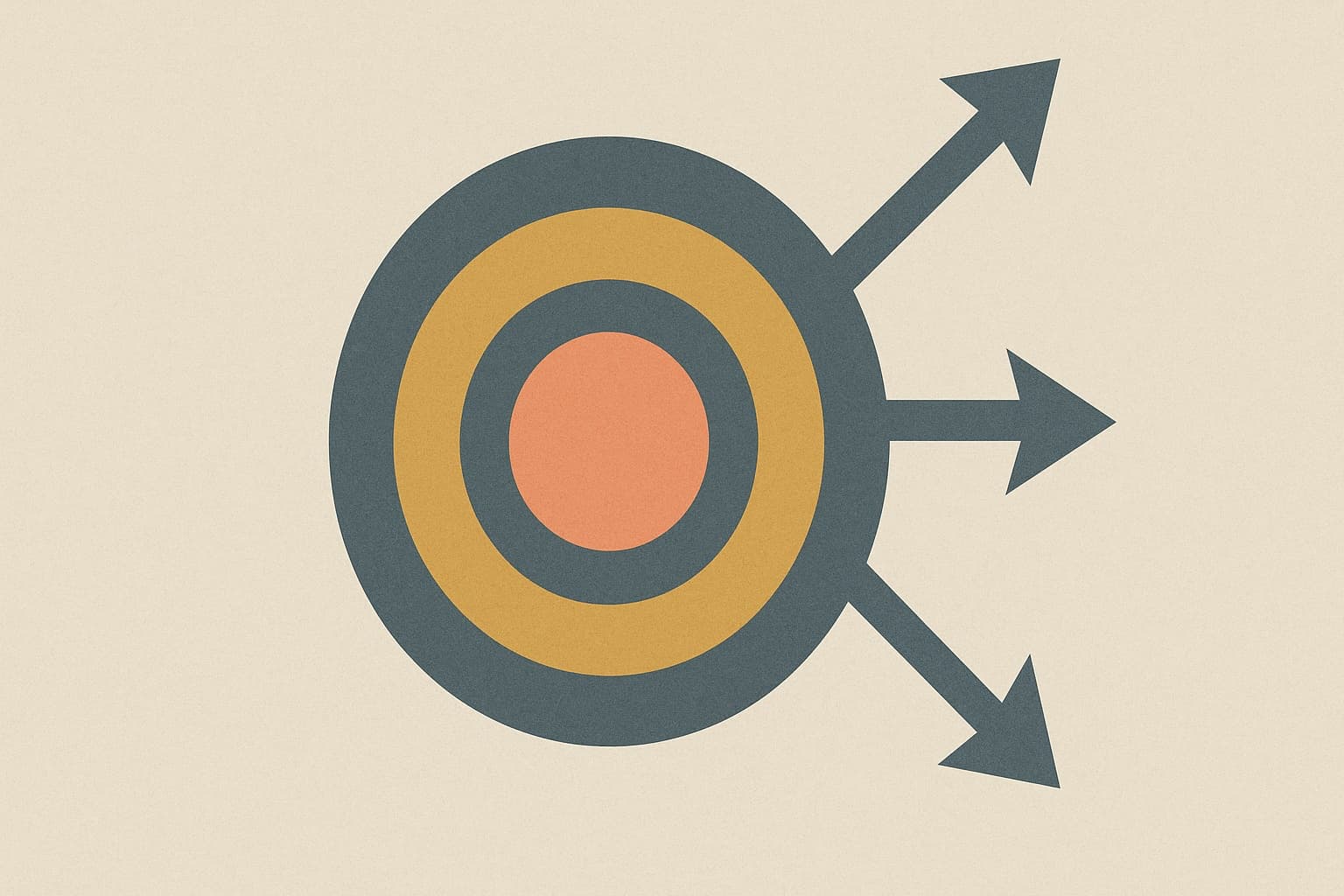
He builds the case around a pattern he calls the Golden Circle: three rings, with why at the center, how in the middle, and what on the outside. Ordinary communication runs outside-in. A typical company says "we make great computers, they are beautifully designed, want to buy one." That is what, how, then a weak ask. Sinek's argument is that this order fails to inspire because it leads with the least motivating information.
The talk uses Apple as the recurring example. Sinek reframes Apple's messaging inside-out: "Everything we do, we believe in challenging the status quo. We believe in thinking differently. The way we challenge the status quo is by making our products beautifully designed and simple to use. We just happen to make great computers. Want to buy one?" Same facts, reversed order. The why comes first, and the product becomes evidence of the belief rather than the headline.
What Is the Golden Circle?
The Golden Circle is a communication framework with three layers: Why (your purpose), How (your process), and What (your product or action). You communicate most persuasively when you start at the center and work outward.
Here is the framework in plain terms:
Why is your purpose or belief. It is the reason your work exists and the reason anyone outside your company should care. Money follows from a strong why.
How is the specific way you deliver on that belief. Your method, your differentiators, the things you do that competitors do not.
What is the tangible output. The product, the service, the task. Everyone knows their what. Few can clearly state their why.
Sinek grounds the framework in biology. He points to the brain's structure, mapping what to the neocortex (rational thought and language) and why/how to the limbic system (feelings, trust, and decisions). His argument is that leading with why speaks directly to the part of the brain that actually drives behavior, while the rational details come in afterward to justify the choice. Researchers debate how cleanly this maps to neuroscience, so treat it as a useful metaphor rather than a settled mechanism. Source: Simon Sinek, Start With Why, Portfolio, 2009.
How Do You Use "Start With Why" in a Real Presentation?
Open with the belief or problem that makes your topic matter, then explain your approach, then reveal the specifics. Most workplace presentations bury the why in slide 14. Move it to slide one.
Here is the swap in a work context.
Instead of opening with: "Today I'll walk through our Q3 roadmap. First feature is the new dashboard, then the API changes, then the mobile updates."
Open with: "Our customers churn most in week one because they cannot find the data they need. Everything in this roadmap exists to fix that first week. Here is how."
The second version gives the audience a reason to care before the details arrive. The features become evidence for the belief. This is the same structural move Sinek praises in the Apple example, applied to a status update.
If you want a tactical version of this for shorter answers, the BLUF method for structuring answers in meetings is the close cousin: state the conclusion first, then support it. Start With Why operates at the level of the whole talk. BLUF operates at the level of a single answer.
Why Does the Delivery Work So Well?
Sinek's delivery works because the structure is repetitive on purpose, the pace is slow enough to follow, and he uses pauses to let each idea land. The content is simple. The delivery is what makes it memorable.
Three delivery choices stand out, and each maps to a dimension of the Wellspoken Index, the scoring system we use to measure spoken delivery across structure, pace, clarity, confidence, and more.
Repetition as structure. Sinek says "people don't buy what you do, they buy why you do it" several times, nearly verbatim. Repetition like this scores high on structure because the audience always knows the through-line. They can repeat it afterward, which is how an idea spreads.
Controlled pace. He speaks deliberately, well below a rushed presenter's clip. Slower pace gives a complex reframe room to register. On the Wellspoken Index, pace sits in a professional zone of roughly 130 to 160 words per minute for most speakers, and Sinek trends toward the lower, more deliberate end during his key lines.
Strategic pausing. Before and after the central line, he pauses. The silence signals "this part matters." Pausing reads as confidence and control, the same effect we cover in how to sound confident in meetings without being loud.
To be clear about sourcing: the dimension framing above is an expert delivery read of a public talk rather than a pipeline-scored measurement of Sinek's audio. The point is the technique, which any speaker can copy.
What Are the Criticisms of "Start With Why"?
The most common criticism is that the biology is oversimplified and that the Apple example is selected after the fact. The framework is a strong communication tool even if the underlying science is loose.
Critics note that the neocortex and limbic system do not divide as neatly as the talk implies, and that picking Apple as the proof case is survivorship bias, because plenty of purpose-driven companies still fail. These are fair points. The framework earns its keep as a way to order a message. Treat it as a structuring habit, valuable even when the underlying science is loose and success stays uncertain. Used as a structuring habit, starting with why reliably makes presentations clearer and more motivating, which is why it remains a fixture in business communication.
Key Takeaway
Start With Why is a reordering trick you can apply to any presentation today: lead with the belief or problem that makes your topic matter, then your method, then the specifics. The Golden Circle gives you the order. Sinek's delivery shows the rest of the recipe, which is repetition, a deliberate pace, and pauses that let each idea land.
FAQ
What is the Golden Circle in one sentence? It is a framework that says you communicate most persuasively by starting with why you do something, then how, then what, working from the center of the circle outward.
Is the "Start With Why" TED talk worth watching? Yes. It is short, clearly structured, and one of the most-cited examples of persuasive business communication, which makes it a useful model to study for both message order and delivery.
How is "Start With Why" different from BLUF? Start With Why orders an entire message around purpose first. BLUF (Bottom Line Up Front) orders a single answer around its conclusion first. They share the same instinct, which is to lead with the most important thing.
Want to see how your own delivery scores on structure, pace, and pausing? Try the Wellspoken Index.