Summary: Amy Cuddy's power posing TED talk claimed that two minutes in an expansive posture raises testosterone and lowers cortisol, but later replications found the hormonal effects did not hold up. The self-reported feeling of power did replicate, and that narrower effect is the part speakers can still use.
Amy Cuddy's TED talk argues that holding an expansive, confident posture for two minutes, a "power pose," can change how powerful you feel and how you perform in high-pressure moments like interviews. The 2012 talk, "Your body language may shape who you are," became one of the most-viewed TED talks of all time. The original claim that posing changes your hormones did not hold up to later testing, but a narrower and more useful version of the advice survives. Source: TED.
This summary covers what the talk claimed, what the follow-up research found, and the practical part you can still use before you speak.
What Did Amy Cuddy's Power Poses Talk Claim?
The talk claimed that two minutes in an expansive posture raises testosterone, lowers the stress hormone cortisol, and makes you act bolder. The headline idea was "fake it till you become it."
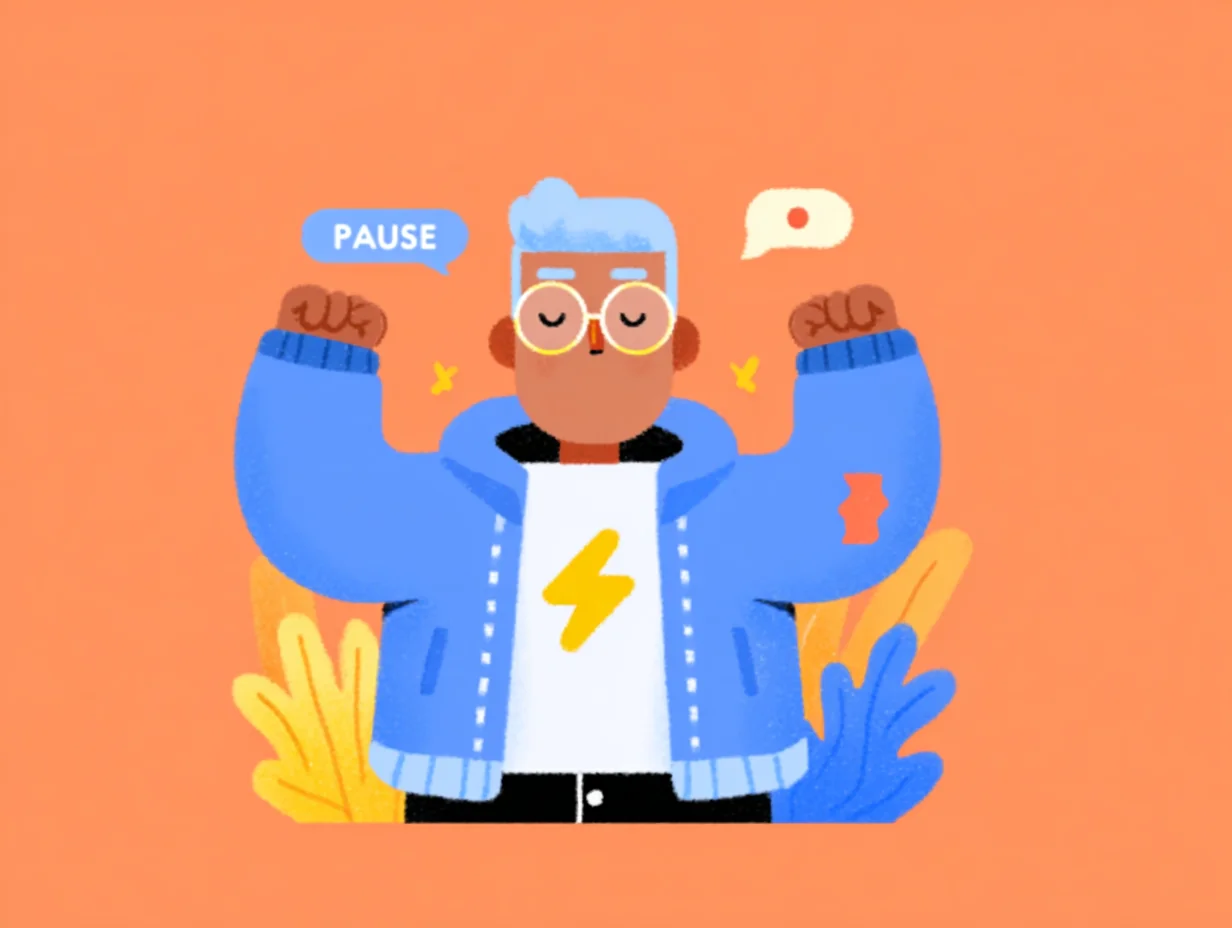
Cuddy built the talk on a 2010 study she co-authored, published in Psychological Science, which reported that people who held high-power poses for two minutes showed measurable hormonal changes and took more risks than people who held low-power, contracted poses. Source: Carney, Cuddy, and Yap, Psychological Science, 2010. The talk translated that finding into a simple piece of advice: before a stressful moment, find a private spot, stand like Wonder Woman or throw your arms up in a victory V, and hold it for two minutes.
The personal story at the end is part of why the talk spread. Cuddy describes a car accident, a brain injury, and being told she did not belong in academia, then frames power posing as a way to "fake it" until the confidence becomes real. The emotional arc, as much as the science, is what made it one of the most shared talks in TED's history.
Did the Power Posing Research Hold Up?
The hormonal and risk-taking claims did not replicate. The self-reported feeling of power did. This is the most important thing to understand about the talk today.
In 2015, a larger replication study by Ranehill and colleagues, also in Psychological Science, tested power posing with roughly five times the sample size of the original. It found that posing changed how powerful people said they felt, but produced no reliable effect on hormones or actual risk behavior. Source: Ranehill et al., Psychological Science, 2015.
Then in 2016, Dana Carney, the lead author of the original study, published a statement saying she no longer believed the power posing effects were real and had stopped studying the topic. That is an unusual and notable move, a first author walking back her own famous finding. Cuddy has continued to argue that the "felt sense of power," the self-reported confidence effect, does replicate across many studies even if the hormonal claims do not. On that narrower point, the evidence is more supportive.
So the honest read is this. Standing in a big posture for two minutes will probably not change your testosterone. It may genuinely change how confident you feel in the moment. For a speaker, the second effect is the one that matters.
What Part of the Advice Still Works Before You Speak?
The durable advice is that your physical state shapes how confident you feel and sound, so you can prepare your body alongside your words before you speak. The mechanism is simpler than hormones. Posture and breathing affect your voice and your nerves directly.
Here is a grounded pre-speaking routine that does not depend on the disputed science. Call it the Two-Minute Reset:
Stand tall and open for one minute. Shoulders back, weight balanced, head level. This interrupts the hunched, braced posture that anxiety produces, which restricts your breathing and tightens your voice.
Breathe low and slow for thirty seconds. Slow exhales calm the nervous system and steady the voice. Shallow chest breathing is what makes a nervous speaker sound thin and rushed.
Say your first line out loud once. The first sentence is where nerves hit hardest. Rehearsing it aloud, even quietly, removes the cold-start wobble.
This routine borrows the useful kernel of Cuddy's advice, which is to prepare your physical state, while dropping the part that failed to replicate. The connection between how you carry yourself and how you sound is real and is something we cover in how to sound confident in meetings without being loud.
Why Does Posture Affect How You Sound?
Posture changes how much air you can move, and airflow drives vocal strength and steadiness. A collapsed chest gives you less breath to work with, which produces a quieter, shakier, faster voice.
When you stand or sit upright with an open chest, your diaphragm has room to work and you can support your voice on a full breath. That support is what makes a voice sound grounded and unhurried. Anxiety does the opposite. It curls you inward, shortens your breath, and speeds you up. This is why a physical reset before speaking can change your sound even if it does nothing to your hormones. The Wellspoken Index measures the downstream signals here, including pace and vocal steadiness, which is often where pre-talk nerves show up most clearly.
Is the Power Poses Talk Still Worth Watching?
Yes, as a case study in both persuasive speaking and the limits of a single study. The talk is a masterclass in structure and storytelling, and the controversy around it is a useful lesson in not over-trusting one dramatic finding.
Watch it for the delivery. Cuddy paces the talk well, uses a clear central image, and lands a personal story that makes the idea stick. Then read the replication debate and treat the specific hormonal claims with caution. The talk is a better model for how to give a memorable talk than it is a reliable manual for changing your body chemistry.
Key Takeaway
Power posing will probably not change your hormones, but preparing your body before you speak still helps. Use the Two-Minute Reset: stand tall for a minute, breathe low and slow for thirty seconds, and say your first line out loud once. The confidence you feel and the steadiness in your voice are the real, repeatable benefits.
FAQ
Does power posing actually work? The hormonal and risk-taking claims from the original study did not replicate, and the lead author later distanced herself from them. The self-reported feeling of confidence does appear to hold up, which is the useful part for a speaker.
What is a power pose? An expansive, open posture held for about two minutes, such as standing with hands on hips or arms raised in a victory V. The idea is to occupy more space rather than contract inward.
What should I actually do before a big presentation? Reset your physical state. Stand tall, take slow low breaths to steady your voice, and rehearse your opening line out loud once. These steady your delivery regardless of the hormonal debate.
Want to see how your nerves show up in your pace and steadiness? Try the Wellspoken Index.