Summary: The Wellspoken Index is a research-informed 1000-point speaking methodology that scores a recording across six observable dimensions: Structure, Conciseness, Confidence, Pronunciation, Filler Rate, and Pace. Its key design choice is calibration, so the score creates useful separation between developing, strong, and exceptional communication and points to the next skill worth practicing.
The Wellspoken Index is a research-informed 1000-point speaking methodology for professional communication. It scores a recording across six observable dimensions: Structure, Conciseness, Confidence, Pronunciation, Filler Rate, and Pace.
The product experience is simple. You record in Wellspoken, and the app returns the score automatically. The methodology underneath is the important part: a calibrated rubric that separates idea organization, verbal efficiency, delivery confidence, intelligibility, filler control, and pacing into distinct measurement categories.
The most important design choice is calibration. A speaking score should create useful separation between developing, strong, and exceptional communication. If everyone lands near 800, the number feels good and teaches very little. Wellspoken is built around a stricter principle: the score should make improvement visible, preserve headroom, and point to the next skill worth practicing.
In one line:
Structure 250 + Conciseness 200 + Confidence 150 + Pronunciation 150 + Filler Rate 150 + Pace 100 = 1000 points.
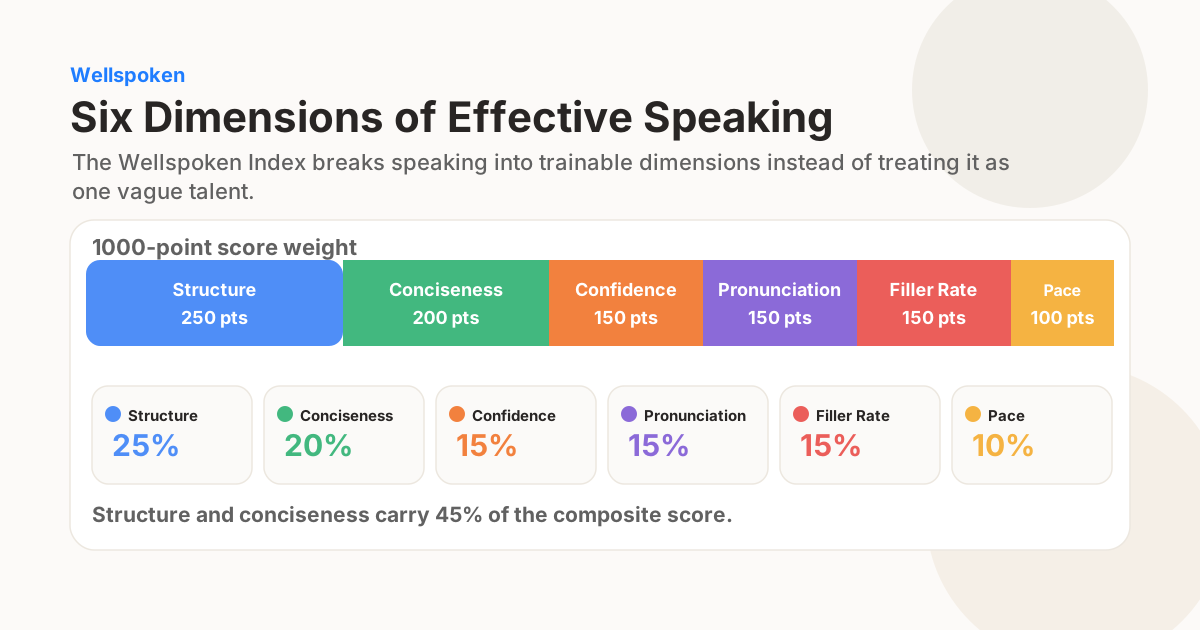
That breakdown is the measurement thesis. Great speaking has several layers. A speaker can sound clear while rambling. A speaker can organize ideas well while softening every claim. A speaker can speak at a comfortable pace while using fillers at every transition. The Index separates those signals so the next practice rep has a target.
Why the Score Has to Feel Specific
A useful speaking score should make the next practice decision obvious. If someone records a one-minute answer and gets a vague score like "great delivery," they leave with a good feeling and no plan. If the same answer shows strong pace, weak structure, and a high filler rate, the next rep is clear: use a framework, pause before the first sentence, and record again.
That is the product bar for the Wellspoken Index. The number is useful because it breaks the performance into parts a person can actually train. A founder preparing for investor questions, an engineer explaining a migration plan, and a manager giving feedback may all receive different weakness patterns even when their total score looks similar. The score matters less as a trophy and more as a map for the next recording.
The Methodology
The Wellspoken Index has three methodological layers:
| Layer | What it does | Why it matters |
|---|---|---|
| Construct definition | Defines speaking quality through six dimensions | The score measures specific behaviors tied to the recording. |
| Signal extraction | Converts a recording into transcript, timing, filler, pace, pronunciation, and language-pattern signals | The system evaluates observable evidence from the recording. |
| Rubric calibration | Weights each dimension and preserves headroom across the 1000-point scale | The score separates usable, strong, and exceptional communication. |
This is the same broad logic used in formal speech assessment: define the construct, collect observable evidence, apply a rubric, and return a score. Wellspoken adapts that model for everyday professional practice, then automates the scoring step so a speaker can get structured feedback without waiting for a human evaluator.
Why a Stricter Score Helps
A useful speaking methodology needs three properties:
| Property | Why it matters |
|---|---|
| Separation | Two recordings that feel different should score differently. |
| Headroom | Strong speakers should still see room to improve. |
| Direction | The score should tell the speaker what to practice next. |
The strictness is intentional. A 1000-point scale gives enough space to represent meaningful differences inside ordinary practice. A 620 can be a competent recording with a clear coaching target. A 760 can be a strong answer that still needs compression. A 900 should require unusually clean structure, direct language, confident delivery, clear pronunciation, low filler usage, and controlled pace in the same recording.
That matters because the goal is behavior change. A generous score can make a user feel good once. A calibrated methodology helps a user decide what to do tomorrow.
The Six Dimensions
| Dimension | Weight | What it measures | Why it matters |
|---|---|---|---|
| Structure | 250 | Sequence, opening, transitions, support, and ending | Listeners follow structured answers faster and remember them longer. |
| Conciseness | 200 | Word economy, answer length, repetition, and precision | Concise speakers create less cognitive load for the listener. |
| Confidence | 150 | Hedging, sentence endings, assertive phrasing, and delivery patterns | Confidence changes whether an idea sounds owned or tentative. |
| Pronunciation | 150 | Intelligibility and clarity of spoken words | Clear pronunciation makes the message easier to process. |
| Filler Rate | 150 | Frequency and clustering of fillers | Fillers expose uncertainty, transition problems, and low pause control. |
| Pace | 100 | Speaking speed, pause timing, and rhythm | Pace shapes whether the listener can absorb the answer comfortably. |
The weights make the hierarchy explicit. Structure and Conciseness carry 45% of the score because professional speaking usually fails at the idea layer before it fails at the sound layer. Pronunciation, filler control, confidence, and pace still matter. They are delivery multipliers. The highest scores require both idea quality and delivery control.
The Theory Behind the Index
Wellspoken treats speaking as a three-layer skill:
| Layer | Index dimensions | What improves |
|---|---|---|
| Listener navigation | Structure, Conciseness | The listener knows where the answer is going and why each sentence is there. |
| Delivery signal | Confidence, Filler Rate, Pace | The speaker sounds steady, direct, and easy to follow. |
| Intelligibility | Pronunciation | The words are clear enough for the listener to process without strain. |
This maps to how formal speaking systems already evaluate speech. IELTS Speaking Band Descriptors separate fluency and coherence, lexical resource, grammar, and pronunciation. TOEFL iBT Speaking uses structured tasks and scoring rubrics that include delivery, language use, and topic development. CEFR documents describe language ability through levels, activities, and quality descriptors.
Wellspoken adapts the same multi-dimensional idea for daily practice. The Index is optimized for repeated measurement loops across interviews, meetings, explanations, role-plays, drills, and unscripted answers.
How the Score Is Calculated
The Index combines two classes of evidence:
- Acoustic and timing evidence: filler counts, filler density, words per minute, pause timing, and pronunciation scoring when audio assessment is available.
- Transcript and discourse evidence: structure, confidence, conciseness, claim clarity, hedging, repetition, and meaning-level patterns in the answer.
Wellspoken's automated scoring engine applies the rubric to those signals, returns one composite number, and shows the dimension breakdown. That is where AI is useful: it makes rubric-based speech scoring instant, repeatable, and available after every practice recording. The user gets structured feedback that normally requires a coach, evaluator, or trained reviewer.
| Score pattern | Best next drill |
|---|---|
| High pronunciation, low structure | Framework practice. Lead with the point, then support it. |
| High structure, low conciseness | Shrinking-window practice. Say the same answer in fewer words. |
| High conciseness, low confidence | Re-record with stronger verbs and cleaner sentence endings. |
| Low filler rate score | Practice pause swaps at transition points. |
| Low pace score | Slow the opening sentence, shorten long sentences, and vary pauses. |
That is the reason the Index exists. "Practice speaking" is too broad. "Your answer is organized and the next lift is hedging plus filler clusters" creates a real plan.
What Is a Good Wellspoken Index Score?
The current calibration is intentionally tougher than early scoring. These ranges are methodological bands inside Wellspoken:
| Score range | Product reading |
|---|---|
| 850-1000 | Exceptional control across idea quality and delivery |
| 700-849 | Strong professional range with visible room to sharpen |
| 550-699 | Functional communication with one or two clear coaching targets |
| 400-549 | Developing range that needs focused repetition |
| Below 400 | Foundational work on clarity, structure, and delivery control |
The best comparison is your own trend inside the same practice type. A Daily 60, a technical explanation, a mock interview, and a real meeting place different demands on the speaker. The total score gives the headline. The dimension scores explain the work.
Why Scores Can Move Lower After Calibration
A lower score after a scoring update usually means the ruler became stricter. The speaker can be the same while the measurement creates more separation between usable, strong, and exceptional speech.
That is a methodology improvement. Early scoring systems often compress the upper range because encouragement is easy to deliver and hard calibration is harder to tune. Wellspoken's current direction is a sharper measurement instrument. The score should reward the behaviors that make a speaker genuinely easier to follow:
- The answer opens with the point.
- The supporting ideas arrive in a clean order.
- The speaker uses fewer softeners and hedges.
- Sentences end with confidence.
- Fillers appear rarely, especially at transitions.
- Pace supports listener comprehension.
The practical reading is simple: compare recordings inside the same scoring era, watch the dimension trend, and use the lowest dimension to choose the next drill.
How the Index Compares With IELTS, TOEFL, CEFR, and Toastmasters
The Index belongs in the applied coaching category. IELTS, TOEFL, and CEFR serve formal language assessment. Toastmasters is a human practice and feedback environment. Wellspoken gives frequent private measurement for work communication.
| System | Primary use | Feedback shape | Best for |
|---|---|---|---|
| Wellspoken Index | Daily communication coaching | 1000-point automated score across six dimensions | Work speech, interviews, meetings, role-play, and unscripted answers |
| IELTS Speaking | English language testing | 9-band examiner rating across official criteria | Formal English proficiency evidence |
| TOEFL iBT Speaking | Academic English testing | Structured speaking tasks scored with official rubrics | University and academic English contexts |
| CEFR | Language proficiency framework | Levels and descriptors across language activities | Shared language proficiency reference |
| Toastmasters | Public speaking and leadership practice | Human feedback, club roles, projects, and mentoring | Live speaking practice with a community |
This distinction matters because "speaking" covers several jobs. Wellspoken is built for measurable practice. It applies a structured methodology quickly enough to repeat the drill while the recording is still fresh.
For product-level comparisons, see Wellspoken vs Yoodli, Wellspoken vs Poised, and Best Communication Coaching Apps.
A Concrete Example
Take this answer:
Yeah, so I think basically the onboarding is kind of too long, and users are maybe getting confused because there are a lot of steps, so we should probably simplify it.
The idea is understandable. The Index would still find several issues:
| Dimension | What the score would notice |
|---|---|
| Structure | The main point arrives after softeners. |
| Conciseness | Several words add little meaning: "yeah," "so," "basically," "kind of," "maybe," and "probably." |
| Confidence | The claim sounds tentative. |
| Filler Rate | The opening and transition points are cluttered. |
Now compare the same idea after a structure and conciseness pass:
We should simplify onboarding. The current flow has too many steps, and users are getting confused before they reach the product's core value.
The revised version leads with the point, names the reason, removes softeners, and stops. That is the behavior the Index is designed to surface.
How to Use the Score
Use the Lowest-Dimension Loop:
- Record a real answer, mock interview response, meeting update, or drill.
- Find your lowest dimension.
- Choose one practice drill that targets that dimension.
- Repeat the same format three to five times.
- Compare the dimension trend, then move to the next bottleneck.
The score matters because it compresses feedback into a decision. A speaker should finish a session knowing exactly what to practice next.
Key Takeaway
The Wellspoken Index is a research-informed 1000-point speaking methodology for professional communication. It measures six trainable dimensions, preserves headroom for strong speakers, and turns each recording into a practice plan. The app uses AI to deliver the rubric instantly, so speakers can record, score, identify the bottleneck, practice, and repeat.
FAQs
What is the Wellspoken Index?
The Wellspoken Index is a 1000-point speaking methodology that measures six dimensions from a recording: Structure, Conciseness, Confidence, Pronunciation, Filler Rate, and Pace.
Why is the Wellspoken Index strict?
The score is strict because measurement needs separation. If most recordings cluster near the top, the number feels encouraging and provides limited direction. A stricter scale creates more useful headroom.
What is a good Wellspoken Index score?
The current product bands treat 700-849 as strong professional range and 850-1000 as exceptional control. Scores below that can still represent useful communication, especially when the dimension breakdown shows a clear next drill.
Why did my score go down after a scoring update?
A lower score after recalibration usually means the measurement became stricter. Compare trends inside the same scoring era and focus on the dimension breakdown.
How is the Wellspoken Index calculated?
The Index combines acoustic and timing evidence, such as filler density, pace, pauses, and pronunciation scoring, with transcript and discourse evidence such as structure, confidence, and conciseness. Wellspoken's automated scoring engine applies the rubric and returns the weighted composite score.
How does the Wellspoken Index compare to IELTS Speaking?
IELTS Speaking is a formal English proficiency test scored by trained examiners. The Wellspoken Index is an automated speaking methodology for repeated professional practice.
Which dimension should I improve first?
Start with your lowest dimension. Structure maps to framework practice. Conciseness maps to shrinking-window drills. Filler Rate maps to pause swaps. Pace maps to sentence length and rhythm work.
Can a clear speaker still score low?
Yes. A speaker can pronounce words clearly while losing points for rambling, hedging, filler clusters, or weak structure. The Index separates those signals so practice is more specific.
Measure your speaking across all six dimensions with the Wellspoken Index. Download Wellspoken